
Equity benchmark indices Sensex and Nifty ended higher in highly volatile trade on Tuesday, buoyed by heavy buying in bank and metal stocks, a firm trend in global markets and optimism over India-EU FTA. The 30-share BSE Sensex climbed 319.78 points, or 0.39 per cent, to settle at 81,857.48.

'Trade deal will act as a strong trigger for market sentiment, not just for domestic investors but also for FIIs.'

Wipro reported Q4FY26 IT services revenue of $2.6 billion, a modest 0.2 per cent Q-o-Q constant currency growth, with adjusted operating profit margin beating estimates at 17.2 per cent. The company announced a significant share buyback of ~15,000 crore, but faces near-term growth challenges, particularly in the BFSI segment, and has issued a soft Q1FY27 revenue guidance.

Stock market benchmark indices Sensex and Nifty surged in early trading session on Tuesday after India and the US agreed to a trade deal under which Washington will bring down the reciprocal tariff on Indian goods to 18 per cent from current 25 per cent.

Bharat Forge reported modest Q4FY26 results but provided strong guidance, anticipating significant growth from its defence, aerospace, and data centre segments, with a projected 25 per cent revenue growth in Indian manufacturing for FY27, despite current high valuations.

Companies in the fast-moving consumer goods (FMCG) sector are losing favour with equity investors, with their price-to-earnings (P/E) ratio declining to its lowest level in six years, now trading at 38.8 times trailing earnings.

From the Sensex firms, Infosys, Tata Consultancy Services, HCL Tech, Tech Mahindra, Tata Motors, Sun Pharma, Maruti and Titan were among the major gainers. Bharat Electronics, Asian Paints, Bharti Airtel and ICICI Bank were among the laggards.

The rupee appreciated 13 paise to close at 90.34 against the US dollar on Thursday, on trade deal optimism and overnight decline in commodity prices, even as the upside remained capped as investors look for more clarity on the India-US trade deal.

Mahindra & Mahindra Ltd reported a significant 48.5 per cent jump in consolidated profit after tax to Rs 5,259.91 crore in the March quarter, primarily attributed to strong performance in its auto and farm sectors, alongside ambitious plans for new SUV and EV launches.

Net inflows into equity mutual fund (MF) schemes scaled a record high in July as the market correction and a raft of new fund offerings (NFOs) lifted lump-sum collections. Active equity schemes raked in a net Rs 42,702 crore in July, going past the previous high of Rs 41,156 crore in December 2024. Systematic investment plan (SIP) inflows continued to scale new highs, rising over 4 per cent month-on-month (M-o-M) to Rs 28,464 crore.

Stock market benchmarks ended with losses for the third straight session on Wednesday as heightened geopolitical tensions, weak global peers and persistent foreign fund outflows unnerved investors.

In a bid to enhance its equity exposure and earn higher returns for its nearly 65 million subscribers, the Employees' Provident Fund Organisation (EPFO) is considering reinvesting 50 per cent of its exchange-traded funds (ETFs) redemption proceeds back into equity. Sources close to the development said a proposal regarding this was discussed in the investment committee (IC) meeting in October last year, and the recommendation has been sent to the Central Board of Trustees (CBT), the apex decision-making body of the EPFO for its approval. The next CBT meeting is scheduled to be held on Saturday.

From the 30-Sensex firms, Bharat Electronics surged nearly 9 per cent post its December quarter earnings. Eternal, Bajaj Finance, Power Grid, Trent, Mahindra & Mahindra and UltraTech Cement were the other major gainers. Maruti, Sun Pharma, Infosys and Bharti Airtel were among the other laggards.
The net inflow into equity mutual funds surged 24 per cent to Rs 23,587 crore in June, reversing the declining trend of the last five months, driven by strong equity market performance across segments, data released by the Association of Mutual Funds in India (AMFI) showed on Wednesday. Also, the latest fund infusion by investors marks the 52nd consecutive month of net inflows into the segment.

Passive funds have resumed gaining ground in the mutual fund (MF) industry after a slowdown in 2024, with their share of assets under management (AUM) reaching an all-time high in 2025. The surge has been driven largely by robust inflows into gold and silver exchange-traded funds (ETFs).

'When markets go into a budget with excessive optimism, the risk of disappointment is higher.'

After investing a staggering amount in May, foreign investors turned net sellers with a withdrawal of Rs 8,749 crore from the Indian equity markets in the first week of this month triggered by renewed US-China trade tensions and rising US bond yields. This momentum follows a net investment of Rs 19,860 crore in May and Rs 4,223 crore in April, data with the depositories showed.

Global trends, trading activity of foreign investors and news flow on tariffs are expected to influence movement in the equity market in a holiday-shortened week ahead, analysts said. Equity markets would remain closed on Wednesday for 'Mahashivratri'.

The decision to hike US H-1B visa application fee to $100,000, trade talks and the GST rate cut will be the key drivers for stock market movement this week, analysts said.

After a brief pause in October, foreign investors resumed selling, pulling out a net Rs 3,765 crore from Indian equities in November, driven by global risk-off sentiment, volatility in global tech stocks and selective preference for primary markets over secondary markets.
Stock markets will be driven by inflation data, trade-related news, earnings and trading activity of foreign investors in a holiday-shortened week, analysts said on Sunday. Global market trends will also influence trading sentiment this week, they added.

Equity markets this week will turn their focus on the RBI's interest rate decision, Q1 earnings from several blue-chip firms and tariff-related news for further cues, analysts said. Moreover, trading activity of foreign investors and trends in global equity markets will also drive investors' sentiment.

Households should moderate large discretionary expenses for the time being.
'They should prioritise essential spending. They should maintain an emergency fund covering 6 to 12 months of expenses.'

West Asia conflict triggers sharp sell-off in Indian markets, with realty, banking and auto stocks leading losses amid energy shock fears.

Domestic equity markets are in elite company. In May, Indian markets joined select developed markets (DMs) such as the US, UK and Germany to record new all-time highs. Among emerging markets (EMs), Brazil is the other market to have logged new highs this month. Asian peers such as South Korea, Taiwan and New Zealand are currently between 2 per cent and 10 per cent below their previous highs made earlier this year. The domestic markets were among the worst-performing major global markets in April amid a lethal second-wave of covid-19 infections.

Foreign investors continue to show confidence in the country's equity market, infusing Rs 18,620 crore so far this month, driven by a combination of global tailwinds and improving domestic fundamentals. This positive momentum follows a net investment of Rs 4,223 crore in April, marking the first inflow in three months, data with the depositories showed.
Benchmark equity indices Sensex and Nifty rebounded on Thursday after three sessions of losses, tracking gains in global markets after US President Donald Trump struck a conciliatory tone on Greenland. In a volatile session, the 30-share BSE Sensex climbed 397.74 points, or 0.49 per cent, to close at 82,307.37.

The rupee witnessed a volatile trading session and settled for the day on a slightly lower note, down 1 paisa at 90.66 against the US dollar on Monday, as traders assessed the details of the India-US interim trade framework.

From the 30-Sensex firms, Maruti, Power Grid, Tata Motors Passenger Vehicles, HDFC Bank, Asian Paints and Tata Steel were among the biggest laggards. However, Titan, HCL Tech, Tech Mahindra, Infosys and Tata Consultancy Services were among the gainers.

Shares of Bharat Coking Coal Ltd on Monday made a bumper stock market debut and ended with a premium of nearly 77 per cent, commanding a market valuation of Rs 18,935 crore. The stock was listed at Rs 45.21, a steep premium of 96.56 per cent from the issue price of Rs 23 on the BSE.

Just over a year ago, India was investors' top pick among EMs. Its slide down the rankings follows $30 billion (over 2.5 trillion) of foreign selling over the past 12-13 months.
Foreign portfolio investors (FPIs) withdrew a substantial amount from Indian equities in the first half of March, driven by geopolitical tensions, rupee depreciation, and concerns about crude oil prices.

'As re-industrialisation gathers pace across regions like Asia, Europe and the US, a wide range of products and inputs will see demand.'
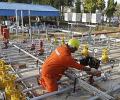
State-run oil-marketing companies (OMCs) are unlikely to significantly raise petrol and diesel prices despite crude oil nearing $100 a barrel, leading to potential margin pressure, while CLSA analysts project a 65 per cent upside for ONGC's stock.

The country's primary capital markets delivered a robust performance in FY26, emerging as a global leader in initial public offerings (IPOs) despite an uncertain environment, the Economic Survey said on Thursday.

From the 30-Sensex firms, NTPC, ICICI Bank, Adani Ports, Bharti Airtel, Sun Pharma and Bajaj Finance were among the biggest laggards. However, Asian Paints, HCL Tech, Bharat Electronics and Reliance Industries were among the gainers.
ICICI Bank, Eternal, Titan, Adani Ports, Tata Consultancy Services and UltraTech Cement were also among the laggards. However, InterGlobe Aviation, Tech Mahindra, Hindustan Unilever and Bajaj Finance were among the gainers.

Aviation stocks experienced a significant surge following the announcement of a two-week ceasefire between the US and Iran, which led to a sharp decline in crude oil prices. This development has positively impacted stock markets and the broader economic outlook for India.

The Indian IPO market is experiencing a significant surge in preliminary filings, with 38 companies submitting papers to SEBI in March 2026, driven by a combination of improved issuer confidence, strategic regulatory compliance, and private equity investors seeking exits amidst volatile market conditions.
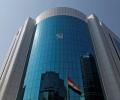
Intellius Recode Ltd has filed preliminary papers with SEBI for an IPO comprising a fresh issue of equity shares and an offer for sale by existing shareholders. The funds will be used to develop digital workers and for general corporate purposes.
